
October 2026
By Paula Nadig, MD
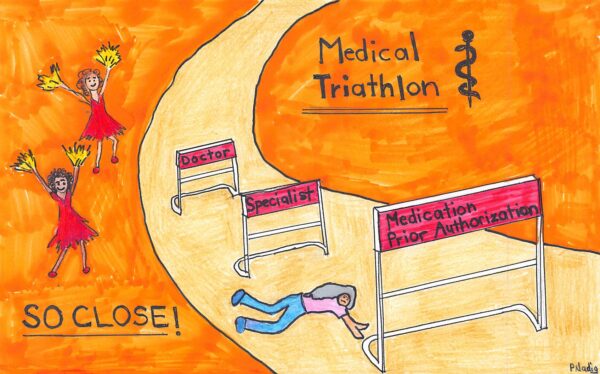 Prior Authorization is a health plan cost-control process that requires physicians and other health care professionals to obtain advance approval from a health plan before a specific service is delivered to a patient to qualify for payment coverage.
In today’s physician practice, the prior authorization process is typically manual and time consuming, diverting valuable resources away from patient care. In addition, prior authorization can delay treatment and impact optimal patient health outcomes.
Take the case of Bill. He has missed work for one month due to severe headaches. His primary physician diagnosed migraine and prescribed a medication. It didn’t ease the symptoms so he prescribed a second medication. When that didn’t help, the primary referred Bill to a neurologist.
It takes two months for Bill to be seen by the neurologist, now three months since his headaches began. The diagnosis of migraine is confirmed. The neurologist has the miracle cure, an injectable. This new medication is expensive. Bill’s insurance is requiring a prior authorization, but first the insurance company wants Bill to try for a month another medication different from the two his primary tried.
Bill has now been sick with debilitating headaches for four months, unable to work or maintain a basic quality of life. His insurance company finally agrees to pay for the injectable. Bill starts to feel better and returns to work.
This is just one example of the prior authorization hurdles that as many as 48% of patients report facing, according to a recent study by the American Medical Association (AMA). In that same study, 91% of physicians report that prior authorization requirements can lead to negative clinical outcomes for patients; 82% report that prior authorization can lead patients to abandoning their course of treatment; and 34% report that prior authorization has led to a serious adverse event for a patient in their care. An overwhelming majority of physicians, 93%, indicate that prior authorization can delay access to medically necessary care.
The average physician practice completes 45 prior authorizations per physician per week. In its summary of its 2025 survey, the AMA notes that prior authorization creates a barrier between patients and necessary care under the guise of controlling cost and has become an overused, dangerous tactic that has woven its way into everyday medicine.
Prior authorization reform bills are taking place at the state level. Delaware is at the forefront of solving this healthcare challenge.
Paula Nadig, MD, FAAP, is a pediatrician who retired after 40 years of practice. She became a member of RD 14 in January 2026.